

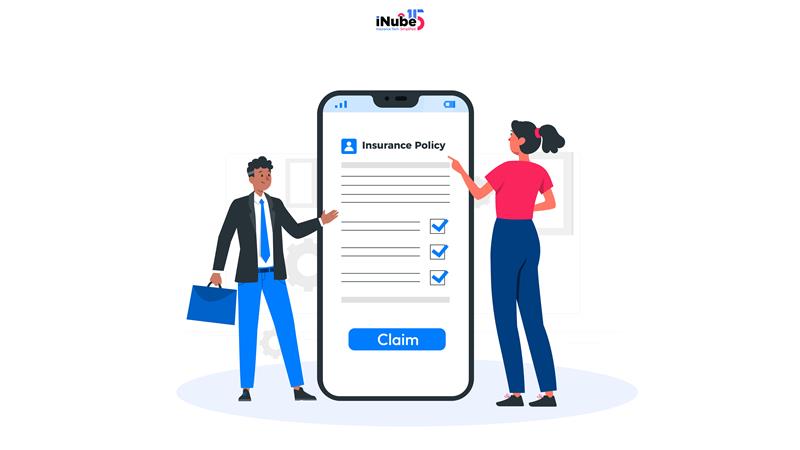
Insurance technology is rapidly shifting the way the insurance industry has been operating, right from an opaque, paper-based model to a transparent and digital-first system. By significantly focusing upon speed, accuracy, and accessibility, insurance technology will be the ultimate enabler for the insurers to build trust.
Read on, as we will be helping you to uncover more.
Top ways by which insurance technology can help insurers strengthen trust
Here are the top and the effective ways by which insurance technology can help the insurers to strengthen trust:
Transparent and real-time claims processing
Instead of the traditional, long, and opaque claims processes, insurers are today leveraging technology integrated with AI and automated platforms to offer an immediate, transparent update.
The customers will be able to file the claims via mobile apps, upload photos of damages, and also track the status of their claims in real time. This significantly removes the anxiety associated with uncertainty. Thus, empowering the insurers to act promptly instead of stalling.
The technological enablers will be AI chatbots, mobile apps, and also automated workflows.
Offering fair and personalized pricing via data transparency
Instead of relying upon broad, opaque, and sometimes discriminatory risk pools, technology will be significantly enabling “fairness” by using the data to personalize premiums.
By using telematics or IoT devices, the insurers will be able to base their prices on actual, real-time behavior instead of assumptions. This is the transparency that will make the premium feel justified, and the customers will be more willing to share the data when they see a direct, fair connection to their costs.
Simplifying the digital experience
In insurance, complexity will often be the biggest barrier to trust and insurance adoption. A simplified digital experience will help strengthen both. By reducing the redundant form fields, offering a clear and concise policy summary will enable conversational interfaces and offer a real-time status update for applications and also claims, empowering the insurers to make interactions more intuitive and also transparent.
Additionally, the customers can easily understand what they are buying, and tracking and also receiving timely communication will further add to boosting their confidence. Additionally, the simplicity in the digital journeys will not just be about design; instead, it will be about the strategic driver of trust and also long-term engagement.
Enabling an ecosystem integration
As insurance technology becomes a part of a broader digital journey, ecosystem integration will no longer be optional. Today, the insurers need technology architecture that will help them to support API-driven connectivity, seamless partner onboarding, and securing a real-time data exchange. A strong ecosystem integration will help in expanding distribution reach while also maintaining a centralized control, reinforcing both operational efficiency and also the customer trust.
How can technology further strengthen the infrastructure
With technology, insurers can seamlessly accelerate the adoption of the cloud-native platforms, low-code environments, AI-driven analytics, and the automation tools.
Additionally, the insurers will be getting to leverage the insurance technology partnerships to gain faster deployment cycles, improved scalability, reduced infrastructure costs, and enhanced innovation capabilities.
However, the focus will still remain balanced, and technology adoption will be aligning with the strategic business goals and the measurable outcomes. Hence, innovation without alignment weakens trust.
What lies ahead?
Strengthening the technology and trust infrastructure does not essentially require any radical overhauls. Instead, it requires a disciplined execution, responsible AI adoption, secure architecture, and also a customer-centric mindset.
Additionally, by modernizing the core systems, embedding accountability into AI, simplifying the digital journeys, and investing in cybersecurity, the insurers will be able to create a resilient foundation for more sustainable growth.
Technology will be the strategic lever for improving customer experience and enhancing their policy purchase journey, and strategically leveraging technology will be the ultimate key in enhancing trust.