

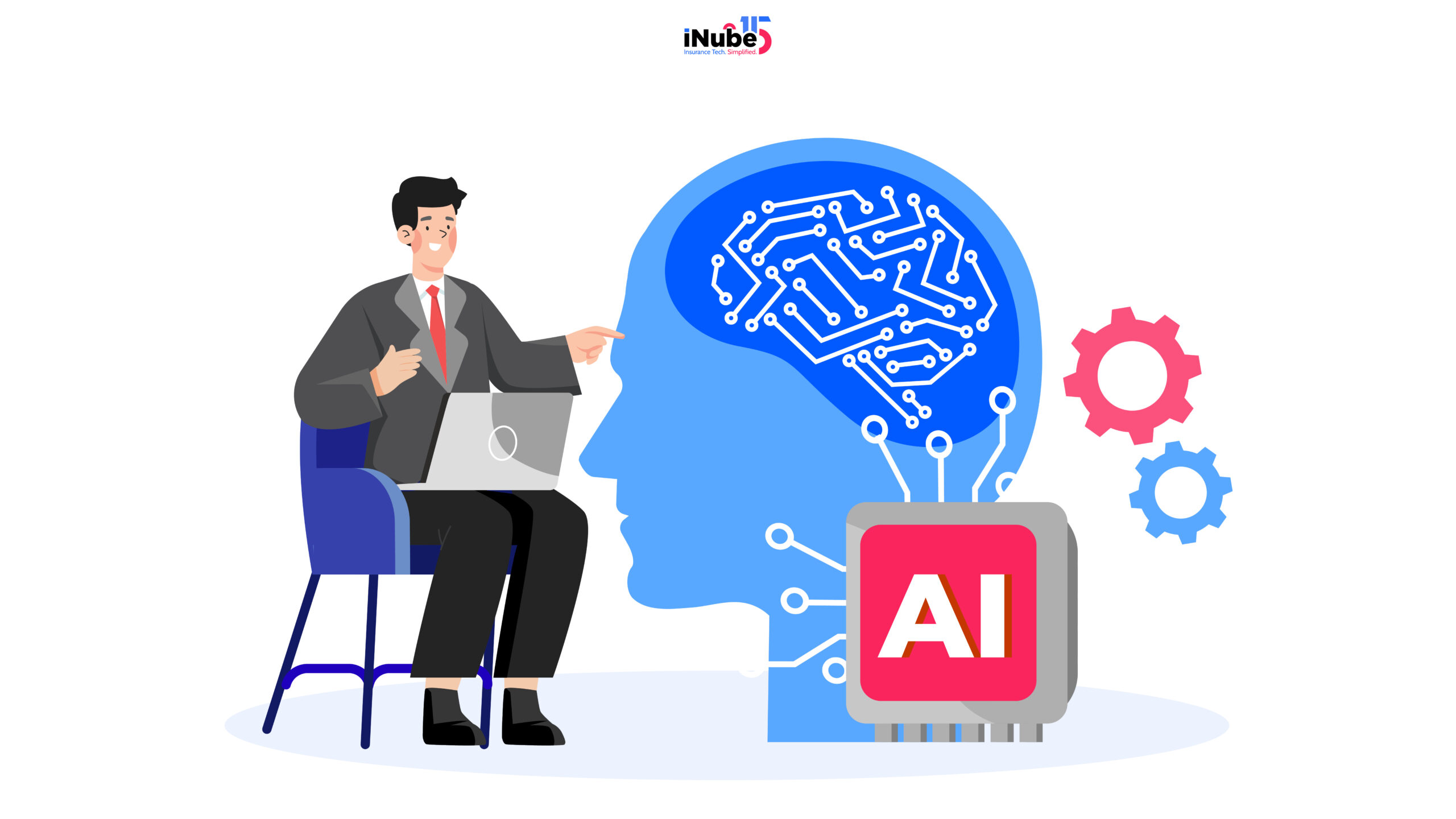
The underwriting landscape is taking a spin, and it’s not an unknown truth. In fact, it has long been considered an expert-driven craft that is rooted in judgment, experience, and also the painstaking manual analysis. Yet, today, that discipline is standing at a crossroads. Generative AI is truly reshaping the way risk is interpreted, risks are priced, and decisions are made. Thus, the lines between human intuition and machine intelligence are truly getting blurred.
The impact of this is profound, and this is not just for speed and scale but also for the very identity of the underwriting profession too.
Read on to decode more.
The chronic challenges that persistently plague underwriting
The top chronic challenges that have been persistently plaguing underwriting are as follows:
Administrative overload
This essentially is all about diverting the expertise away from evaluating complex risks. Additionally, the industry benchmarks have essentially shown up to 40 percent of an underwriter’s time is lost to the non-core tasks that include data entry and document review.
Fragmented data and poor information
Another one of the key chronic challenges in underwriting has been fragmented data and also poor information access, which essentially hinders the comprehensive risk evaluation. In one of the recent global underwriting surveys, it was highlighted that 65 percent of underwriters have cited having ineffective systems as the key barrier to performance.
Legacy processes slow the decision cycles
The legacy processes have been one of the key roadblocks for the underwriters, and this essentially means complex risk assessments that were historically taking days or even weeks, making it too slow for the modern customer’s expectations.
Biases and variability
Traditional underwriting has been filled with biases and variability in judgment, which can persist when the risk insights are buried under heavy unstructured data.
These are the frictions that would not only inflate the operating costs but also limit the underwriting ability to scale in the face of the evolving portfolios, hyper-dynamic risk environments, and the new categories of exposure.
Is GenAI the catalyst or the disruptor?
While the common query in the minds of the underwriters would be the actual role of GenAI, its promise to collapse these inefficiencies is the actual spotlight in the traditional underwriting workflows:
Offering data synthesis at scale
When human underwriters struggle with PDFs and the siloed databases, GenAI actively excels in extracting, normalizing, and synthesizing the insights across the disparate sources in real-time. The platforms, such as Amazon’s AI tools, are truly enabling the intelligent rule validation, calling for clearer justification for decisions, which is a critical advantage in a high-volume environment.
Easing up time—from days to minutes
The GenAI tools are radically accelerating the decision points. The studies have shown that the AI-assisted underwriting would shrink the standard decision time from days to roughly 12 minutes, all while preserving the high accuracy in risk assessment.
Offering productivity and precision gains
Global research studies have significantly shown that insurers are embracing GenAI at an extremely accelerated pace. In fact, one of the reports by McKinsey states that GenAI can meaningfully boost productivity, premium growth, and also technical performance by up to 20 percent in key functions that include risk assessment and also personalized underwriting.
Is Underwriting truly being redefined or rewritten?
The answer to this question is not technical; instead, it is philosophical. The underwriters have always balanced the quantitative precision with qualitative judgment. In a world where the data patterns are machine visible at scale, the human decisions will need to elevate beyond the pattern recognition toward stewardship, which means having ethical oversight, customer empathy, model governance, and also strategic risk articulation.
With GenAI in underwriting, the process is rapidly moving from manual evaluation to critical interpretation that essentially includes everything- from gathering data to questioning its integrity, from applying rules to governing the models, and from processing submissions to shaping the risk strategy.
This is not the transformation, which is only operational; instead, it is existential. Underwriting is not disappearing but is evolving into a discipline where human accountability will be becoming even more important as the machine capability expands.
What’s ahead?
Generative AI is not a lateral improvement; instead, it is a structural force that essentially blurs the line between chronic underwriting pain and also competitive advantage. Additionally, the underwriters who embrace AI as a co-pilot, leveraging it to synthesize data, give the context, and accelerate the decisions, will be the ones who will thrive.
Those who will be viewing it purely as a replacement risk will find themselves outpaced by both data-driven competitors and the platform ecosystems that embed AI at the core of the underwriting workflows.