

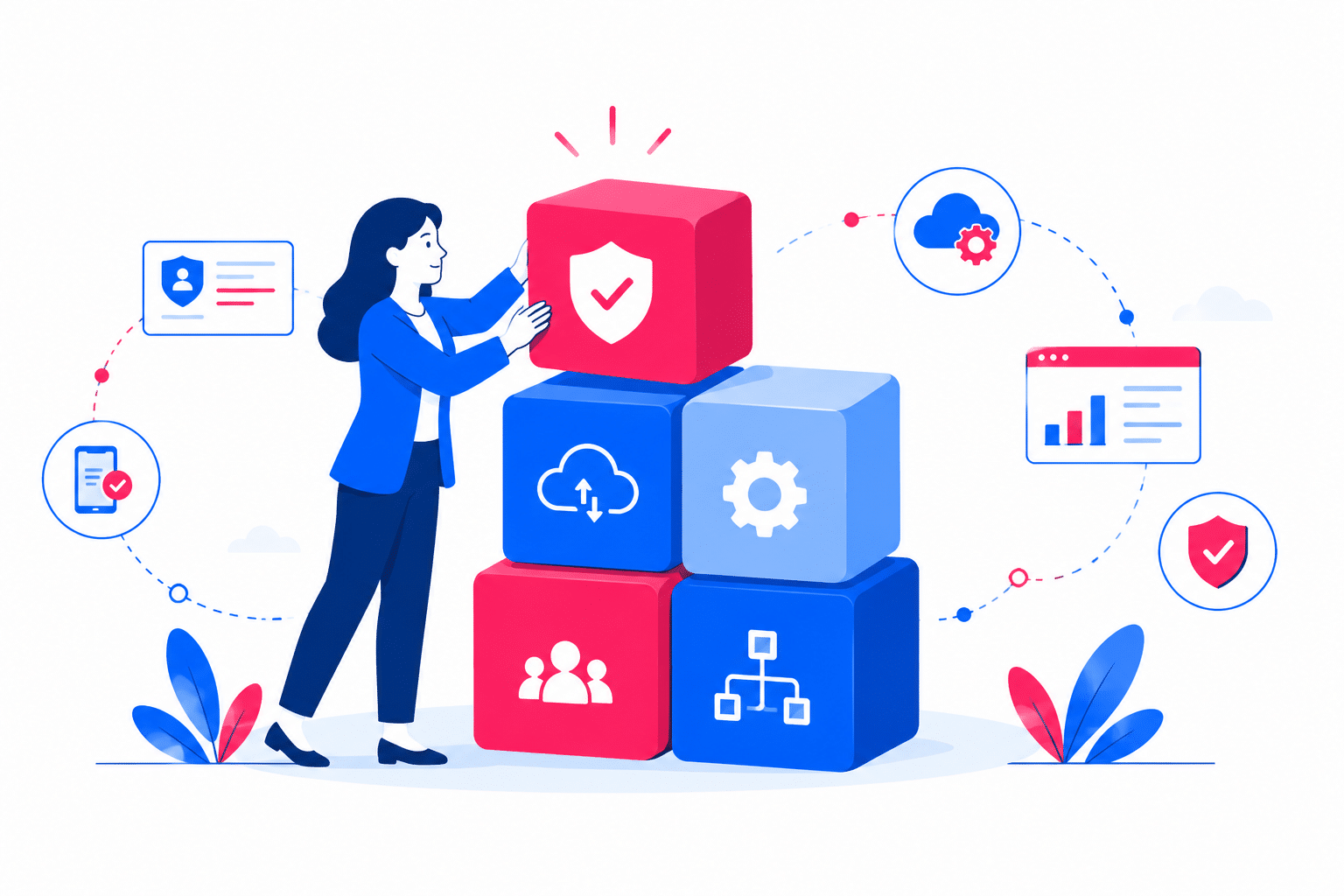
The insurance industry is moving much faster than its infrastructure ever has before, and the gap between the insurers with modern digital platforms and those without it is rapidly widening every year. A truly modern platform is not something that is a flashy feature; instead, it’s a set of interconnected building blocks that work together to support everything, right from embedded distribution to the real-time claims processing. Modern digital insurance platforms are rapidly changing the operational landscape of the industry.
Five building blocks of a modern digital insurance platform
Here are the five building blocks of a modern digital insurance platform:
A flexible, API-first architecture
Every modern digital insurance platform starts with the architecture, and the defining trait of that architecture today is an API-first design. Instead of building rigid, monolithic systems where every function is tightly occupied. The API-first platforms expose the core capabilities, which include quoting, underwriting, policy issuance, and claims, as modular services that can be accessed independently.
This is extremely important for scales. An API-first architecture is what truly allows an insurer to power the embedded insurance partnerships, connect with the fintech apps, and plug into a retailer’s checkout flow without truly rebuilding the entire core system for every new integration. This is what actually makes the platform truly future-proof; as insurance technology evolves, the new capabilities can be added as additional services instead of requiring a full system overhaul. The insurers without this flexibility will find themselves stuck, as they will be negotiating the months-long custom integrations every time a new distribution opportunity appears.
A partner and distribution ecosystem layer
This is all about the way insurance actually reaches customers today, through partnerships, and not just direct channels. A modern insurance platform needs a dedicated layer for managing partner relationships. This includes onboarding new distribution partners, configuring the product rules per partner, and tracking performance across every channel through which a product is sold.
This is the layer that makes embedded insurance operationally sustainable at scale. Without it, every new partner-a retailer, airline, or lending platform becomes a custom project that requires manual coordination between different teams. With a proper ecosystem layer, the partners can be onboarded through standardized workflows; the product terms can be adjusted per channel without re-engineering the core system.
An automated decisioning and workflow engine
This block is all about the technology that does the work behind the scenes; this means an automated engine that handles decisioning and process orchestration across the policy lifecycle. This covers everything from applying business rules during underwriting to routing the tasks between systems and people when a process requires human judgment.
The distinction that matters here is orchestration and not just the automation of isolated tasks. A modern platform doesn’t just automate the individual step, but it also manages the entire workflow, knowing when a claim truly needs to move from an automated check to a human reviewer or when a policy change requires a compliance sign-off before it actually proceeds. This reduces the operational drag that comes from the disconnected point solutions, where automation exists in pockets, but the process as a whole still requires a lot of manual coordination.
A governance, security, and compliance layer
As the insurers expand across different regions, products, and partnerships, the governance layer is what will reinforce the consistent data privacy standards, regulatory disclosures, and access to the controls across every part of the platform.
This is not a bolt-on checklist; in a modern platform, the governance is built into the transaction flow itself. Every quote, policy, and claim carries out the audit trail that is needed for regulatory reporting. The access permissions will be managed centrally instead of being configured separately in every system. The data residency and encryption requirements are enforced automatically instead of relying upon manual review.
A reporting and business intelligence layer
A modern reporting and business intelligence layer aggregates the data across multiple underwriting, claims, data, distribution, and customer service into the dashboards and the analytics tools, which would give the leadership a real-time view of the business—not a monthly report that was built from the spreadsheets that were stitched together after the fact.
This specifically matters because decisions made on stale or fragmented data are the decisions that are made too late. As technology matures, the insurers with the clearest, most current view of their own data are the ones that are able to adjust the pricing, products, and partnerships the fastest when market conditions shift.
What’s next?
A modern digital insurance platform is not defined by any single feature; instead, it’s built upon a few of the most crucial and interdependent building blocks. The insurers who invest in these technological foundations are the ones who will be best positioned to lead in insurance technology and distribution.