

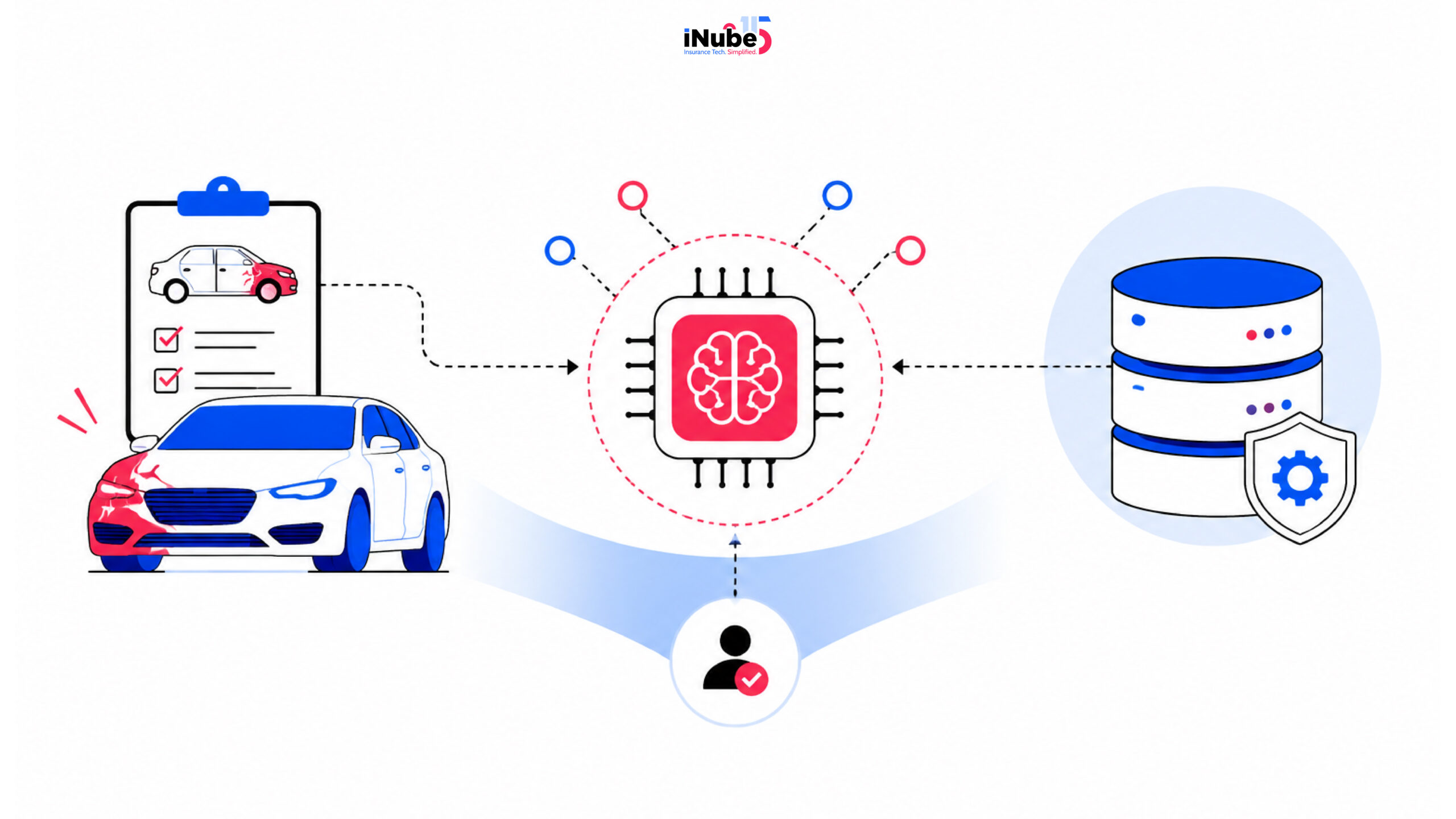
Most of the Auto claims AI project quietly becomes part of those boardroom conversations that never make it to reality. Someone proposes a pilot, and someone asks, “What about our core system?” and the conversation slowly takes the route of a multi-year replacement discussion, which nobody has the budget or the appetite for. This is the meeting that is based on a false choice, and AI does not necessarily need to replace your core operations to change the way auto claims get handled.
Core system was never the obstacle
It does not matter which core system an insurer operation runs, whether it’s a major commercial system or something that is built in-house; these are the platforms that are good at what they were built for. These include being the system of record for policy and claims data. These were built to score a damage photo in real-time or essentially flag a suspicious claim pattern the moment it hits the queue. This is a different job, and it does not require touching the core to get it done. Here, the AI overlay tools connect with the insurer’s existing claims platform via API integration, adding an automated fraud scoring. straight-through processing and digital assessment on top of the system already in production.
How does the integration work?
For the insurers who are running on a modern claims platform, the pattern remains fairly standardized by now. A first notice of loss triggers a webhook; the claim payload gets passed to an AI processing layer that is sitting right outside the core, and that layer extracts, validates, and also scores the claims, which is usually within two to five minutes. The structured output then writes back into the core system’s native field, with AI’s reasoning logged as claims notes for audit purposes.
The gap where the insurers are and where AI bridges it
The industry-wide straight-through processing rates in P&C claims sit below 10%, and nearly 60% of the insurers report straight-through processing at all today. Additionally, the insurers who have layer AI into their existing claims workflows are experiencing much different numbers, top personal line insurers who are approaching a 35% STP rate on eligible claim types, without having any core replacement anywhere in the project.
For instance, the insurers who are running on the AI-enabled auto claims report cutting down on the resolution time from around 30 days to roughly 7.5 days. This significantly brings down the cost per claim.
What slows down these projects
The AI models are the easiest parts here, and most of the vendors in this space are working with much more maturity and with largely interchangeable technology. One thing that truly takes up a lot of time is the integration of AI into the existing claims infrastructure. This is especially if it predates the modern API standards, as per the technical breakdowns of the real-world AI claims deployments. If your system is still moving data, the nightly batch files or the claim records are carrying a decade of inconsistent formatting; this is exactly where a well-scoped project truly turns into a stalled one.
The smart way is in the narrow way in
The insurers who are getting the real value from this approach aren’t really automating their entire claims management infrastructure from day one; instead, they are picking one narrow, high-volume segment and running it through AI-assisted straight-through processing and expanding once the results truly hold up. This is not just caution for its own sake; instead, it’s now why the claims are now accounting for the majority of the live AI implementations across the insurance industry and why most of those deployments started as a single, well-scoped pilot instead of sweeping the core operations for a complete overhaul.
What’s more?
The insurers who get real value from this approach are not automating their entire playbook; instead, they are picking one narrow, high-volume segment and running it through AI-assisted straight-through processing and expanding once the results start holding up. A typical sequence usually looks like three to six months of proving the model on one claim type along with a clearly defined success metric, a short internal review comparing the actual STP rates and cost per claim against the baseline, and then a second segment gets added up once the first one is in stable production and not just in a demo environment.
This is not just caution for its own sake; instead, it builds an internal track record that makes the next expansion much easier.
What do the insurers need to truly consider?
One of the key things that the insurers need to consider is stopping waiting for core replacement, which may never get funded. It’s important to start with a phased implementation approach so that none of the existing processes get disturbed. Bringing in compliance and leadership teams into the plans early, not after a pilot is already built but after a rollout truly needs to scale. The insurers who are pulling ahead in auto claims at this point will be the ones who will be owning the biggest transformation budget.
Commonly asked questions
Do I need to replace my existing claims system to use AI for Auto claims management?
No, there is no need to replace an existing claims system to leverage AI into the auto claims management process. AI can be typically added as an integration layer connected via API to your existing system, automating tasks, such as damage assessment and fraud scoring, without any core replacements.
Is the iNube Auto Claims System capable of handling massive volumes?
Yes, the iNube Auto claims system is built to handle volumes of claims without disrupting any of the existing processes.