

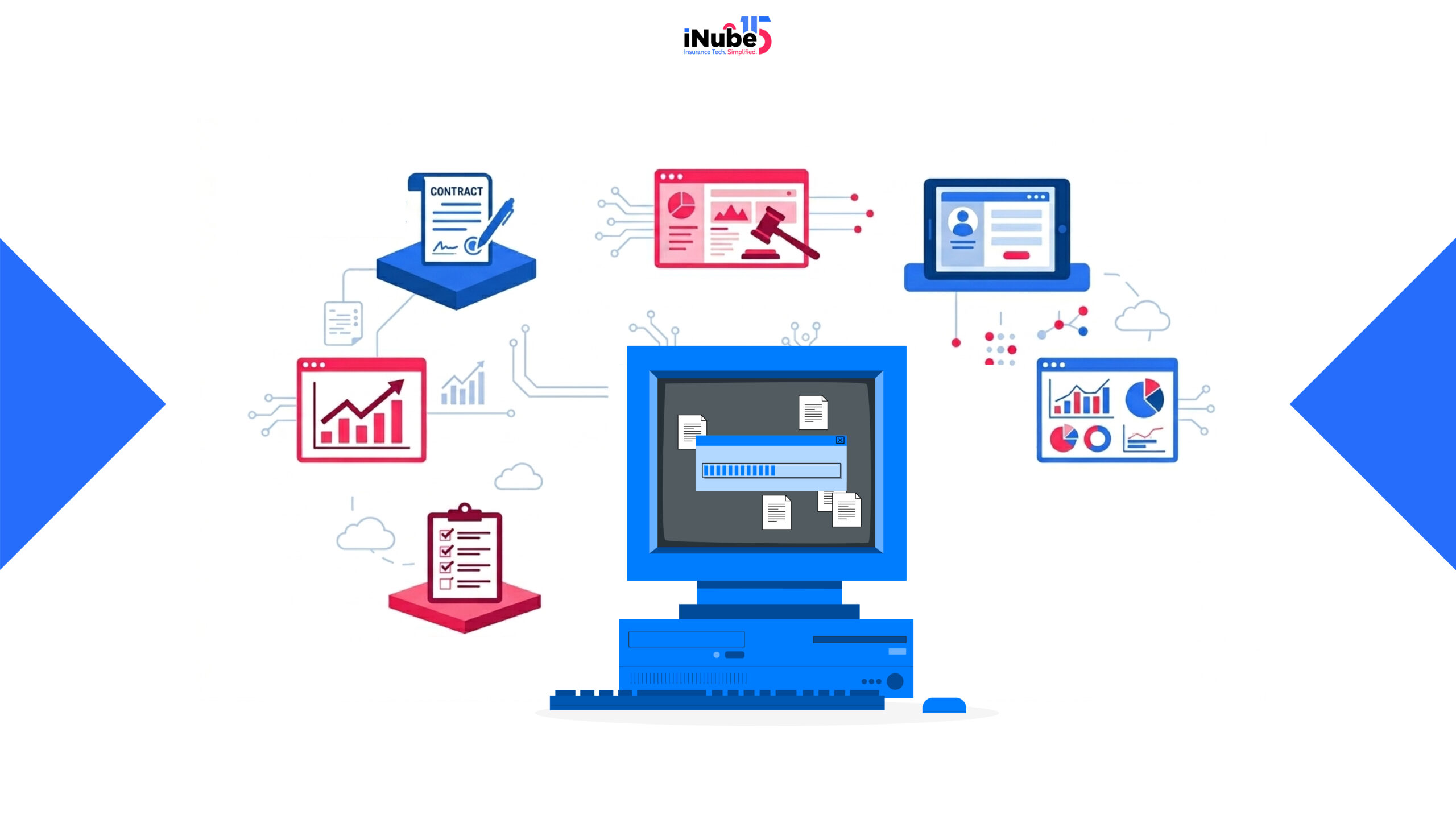
The insurance industry is expecting to have a larger increase in information technology as the years roll by. With the budget spending this year, the financial institutions are entering the year with competing technology priorities. Additionally, the biggest IT budget that is expected to surge by 13.8% is in Life and Health Insurance, followed by 12.9% in Property and Casualty insurance. As these figures increase, there is a significant surge of about 7 percent, marking quite a good financial surge that is above the industry average.
This is exactly where the insurers need to be mindful of their IT spending while tactfully dealing with the legacy system worries.
Dive-in as we decode more.
What’s more?
The successful insurers are moving beyond the traditional insurance operations and are moving towards generative AI, automated risk monitoring while replacing their age-old legacy systems, which have slowed down their operations in the past.
The aggressive IT spending in the insurance space has essentially been all about standing in contrast to the financial sectors.
Why is legacy drag becoming quite costly?
The legacy drag is extremely real, and they have been extensively supporting underwriting, policy management, claims and also compliance for decades. However, today they are trying to show the way it strains operational efficiency.
The product launches are taking months, and even much longer. Secondly, the integrations feel like they have gone for workarounds while the data remains siloed, limiting the real-time decision making.
These are not about the systems failing; instead, they are about the they were never designed to keep up with speed, and interconnectedness, which the insurance operations essentially demand.
This is exactly where the gap is becoming even harder to ignore.
Check out the article where we have laid down some of the simple steps in strategically proceeding with core modernization while technology influx rapidly gains momentum in the industry.
So, where are the insurers heading amid an influx in IT Investment…
This is exactly where the insurers need to step back and make their decisions clear today. Blindly chasing the transformation for the sake of it will not yield anything good; instead, it will be further becoming more deliberate, balancing ambition with practicality.
In 2026, this is the direction that is becoming quite clear.
Constructing a core technology model which understands edge
There has been a noticeable shift in 2026, and the emergence of most of the insurers is making the insurers think informally about the core insurance strategy model.
The core, or legacy, system often continues to handle stability, compliance, and transaction processing, followed by modern platforms, which handle agility, customer experience, and integrations.
This is the model that will be helping the insurers to launch products much faster without having to touch their core systems, integrate with their partners seamlessly, and also experiment and iterate without having any kind of large -scale risk.
In most of the ways, this is how the insurers will be future-proofing themselves, without having to bet everything on a single unified transformation program.
Going beyond the product-centric to journey-centric thinking
Traditionally, insurance has revolved around various products. However, in 2026, the insurers are truly rethinking this. The shift is increasingly moving towards embedded insurance models and personalized offerings, which will be on the basis of behavior and context, followed by simplified buying experiences.
It is a subtle but a very important change, and insurance will be no longer sold; rather, it will be experienced within a journey.
Treating ecosystems as the growth engines and not channels
Insurance partnerships aren’t something that is new; instead, they are changing the way insurers are actively investing in them and are no longer becoming just the “digital channels.” Instead, they are becoming primary growth engines.
Today, the insurers are designing products that are specifically for partners that include travel, mobility, and fintech. Additionally, investing in API readiness and offering a much faster onboarding followed by the alignment of the operations to handle the high-volume, low-touch transactions.
This is exactly where a different mindset is required, and the insurers need to step up in becoming a part of their experience.
Embedding the Intelligence into everyday operations
AI will be no longer sitting at isolated pilots or in the innovation labs. Instead, it is now a part of the everyday decision-making followed by the crucial process decisions in underwriting, fraud detection through claims, customer support and servicing, followed by risk-based pricing.
It is important to note that technology isn’t the only factor here but the way it gets quietly integrated into the insurer ecosystem. The goal is quite simple here, which is to make much better decisions at scale and that too without adding any kind of complexity.
The shift from cost optimization to value creation
For years, the technology investment in insurance has always been about efficiency, and thus, reducing costs, automating the processes and improving margins have become quite important. While the importance continues, the conversation is slowly evolving.
Becoming operationally resilient by design
The regulatory scrutiny is increasing, followed by cyber risks and global uncertainties, while resilience becomes a priority.
This is exactly where the investors are using a scalable cloud-based infrastructure and better data governance and auditability, followed by the systems that can seamlessly adapt quickly to the regulatory changes.
Here, resilience will be no longer about being reactive; instead, it will be all about being designed into the operating model right from the start.
Where does it all fit in?
The thing that ties all these together is the mindset.
Additionally, the insurers will be moving from a big-bang transformation to a continuous evolution, from internal optimization to external integration, and finally from technology adoption to business alignment.
This is exactly where a growing recognition will be transforming it into a one-time initiative.