

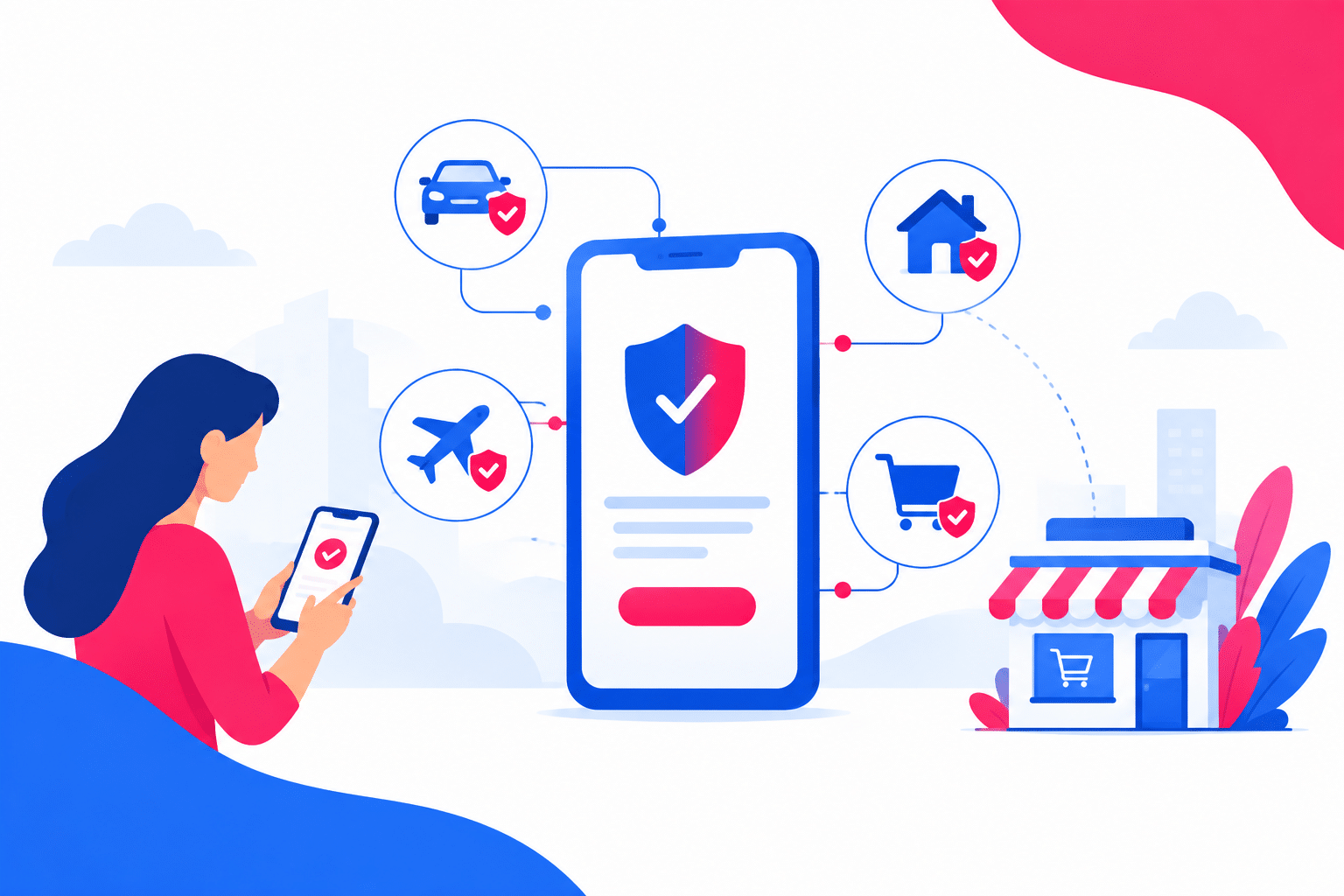
Embedded insurance is fast becoming a multi-billion dollar distribution channel within the next few years. With its wider popularity, it’s growing at a much faster pace than any other segment of the insurance industry. The shift here is quite simple and powerful: insurance coverage will no longer be waiting for the customers to go looking for it. It will show up at the exact moment when they need it. It can be anywhere—inside the purchase of a phone, a flight, or a car loan. This is the kind of reach that is not possible without the digital platforms that are working behind the scenes. They are the infrastructure that turns embedded insurance from a niche add-on to one of the fastest scaling models in the world of insurance technology today.
What makes Embedded insurance different
Embedded insurance seamlessly integrates coverage directly into the purchase journey of another product or service, instead of requiring a separate transaction. These can be in everyday moments, which can be as simple as in the purchase journey of buying a laptop. The insurance will not be an add-on sold afterward; instead, it’s part of the preliminary purchase experience.
This is the model that only works when the underlying technology can operate invisibly and also instantly.
Digital platforms act as the connective tissue
At its core, a digital platform in this context will be acting as the technical layer that will connect an insurer’s underwriting and policy systems to a non-insurance business. This includes having wider visibility into multiple stakeholders all at real time. These are the platforms that handle everything behind that simple checkout screen. This includes eligibility checks, pricing calculations, policy issuance, and compliance documentation, all within just milliseconds.
Without this connective tissue, embedded insurance will collapse under its own complexity. Each and every retail or fintech partner would need to build custom integrations with every insurer that they collaborate with. The digital platforms would solve this by standardizing the interface, typically being connected through APIs, so that integration, which once took months, will now be done in just weeks or even days for a well-established platform ecosystem.
APIs are the engine behind seamless distribution
Well-designed APIs allow a travel booking system, for instance, to request a real-time insurance quote, receive a bindable price, and issue a policy. All these without the customer ever leaving the booking flow or the travel company touching a single line of insurance code.
This is extremely important, especially for scales. The traditional insurance distribution relies on agents, brokers, or direct-to-consumer websites. Here, the channels grow linearly with sales effort. API-driven embedded insurance grows differently. Once the integration is built, it scales with the partner’s own transaction volume, whether it is a thousand purchases a day or a million. This is exactly why insurance technology investment has shifted majorly toward API infrastructure over the past several years.
Data flow and real-time underwriting
Scaling embedded insurance is not just about connecting the systems. Instead, it will be about making smart, fast decisions with the data flowing through them. The digital platforms would increasingly incorporate real-time, underwriting engines that would assess the risk using contextual data that is available at the point of sale. This also includes the value of the item being purchased, the customer’s location, or even the behavioral signals from the partner’s own platform.
This essentially shifts underwriting from a static, form-based process to a more dynamic one. A digital platform will be able to adjust the pricing or the coverage terms instantly. This will be based on the specific transaction context. Instead of relying on generic, one-size-fits-all policies. For insurers, this essentially means better risk-adjusted pricing, while for the customers it means more relevant coverage will be offered at a fairer price. This often comes without realizing how many calculations have happened in the background.
Why does this matter for the industry today?
The rise of Embedded insurance truly reflects a larger shift that is happening across the insurance industry. Today, insurance distribution is moving away from insurers pushing products and towards insurance that meets customers within the experiences that they already have. Digital platforms today are what will be making that shift operationally possible, instead of just conceptually appealing.
For traditional insurers, this creates both an opportunity and added pressure. By partnering with digital partners, there is greater access to distribution channels and also to customer moments that will be difficult to reach through conventional marketing. At the same time, insurers who do not modernize their own systems to support real-time API integration risk being left out of these partnerships forever.
What’s ahead?
Today, digital platforms have become an essential infrastructure behind embedded insurance. This is exactly what turns once a required complex, custom integration into a more scalable and real-time distribution model. As this approach truly expands across more products and industries, the platforms that are enabling it will be shaping how and where insurance reaches the customer next.