

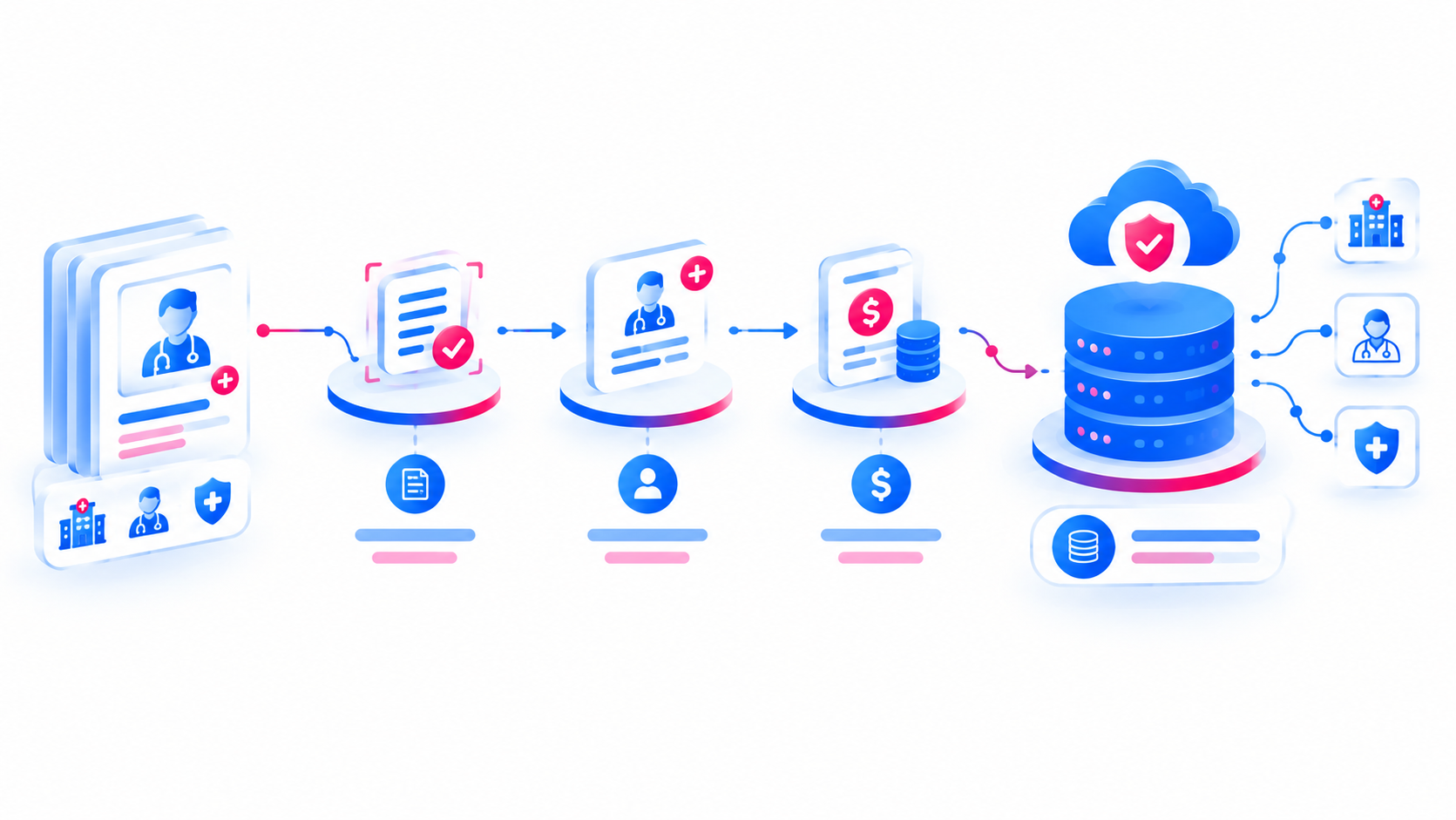
AI is only as smart as the data it can reach. Many insurers discover this the hard way: a promising model stalls because the data it needs is scattered across policy, claims, and billing systems that were never designed to talk to each other. Before any AI strategy can deliver, the foundation has to be right. That foundation is a modern insurance data architecture built for access, quality, and trust.
Why Data Architecture Comes Before AI
It’s tempting to start with the model. But in insurance, most AI projects succeed or fail based on the data behind them. Underwriting models need consistent risk data, fraud detection needs connected claims history, and customer-facing AI needs a unified view of the policyholder.
Legacy environments rarely provide this. Data sits in silos, definitions vary between systems, and critical information is trapped in documents, emails, and PDFs. Teams spend most of their time finding and cleaning data rather than using it. An AI-ready insurance data architecture solves this at the source, so every new use case doesn’t have to start from scratch.
What “AI-Ready” actually means?
AI-ready doesn’t mean having the most advanced tools. It means your data meets a few practical conditions:
- Accessible. Teams and applications can get the data they need, securely, without months of custom integration.
- Consistent. A “policy,” “claim,” or “insured” means the same thing across the organization.
- High quality. Data is accurate, complete, and timely enough to support decisions.
- Governed. Ownership, permissions, and lineage are clear, so data can be trusted and audited.
- Connected. Structured data, such as policy records, and unstructured data, such as claim notes and images, can be used together.
These qualities matter because AI models amplify whatever they’re fed. Poor data produces confident but unreliable outputs, which is a serious risk in a regulated industry.
The Core Layers of an Insurance Data Architecture
A well-designed architecture is built in layers, each with a clear job.
Data Sources and Ingestion
This layer captures data from core systems, such as policy administration, claims, billing, and CRM, along with external sources like telematics, property data, credit information, and third-party risk data. Ingestion should support both batch loads and real-time streams, since some use cases, like fraud screening at claim intake, can’t wait for an overnight update.
The Storage and Processing Layer
Modern approaches typically combine a data lake for large volumes of raw and unstructured data with a data warehouse for curated, analysis-ready information. Many insurers now adopt a “lakehouse” pattern that blends both. Cloud platforms make this scalable, but the design matters more than the vendor: raw data should be preserved, while cleaned and standardized versions are layered on top.
The Semantic and Modeling Layer
This is where business meaning is applied. A common data model for insurance defines entities such as policies, coverages, parties, claims, and exposures in consistent terms. Without it, every team builds its own definitions, and AI models trained on one version of the truth give different answers than those trained on another. Industry standards can speed this up and ease data exchange with partners.
The Access and API Layer
Data has no value if it can’t be used. An API layer exposes curated data and functions to applications, analytics tools, and AI systems in a controlled, secure way. Well-designed APIs let a claims app, a broker portal, and an AI model all draw from the same trusted source rather than maintaining separate copies. This layer is also where permissions, rate limits, and logging are enforced.
The AI and Analytics Layer
On top sits the tooling for building and running models, including feature stores that reuse prepared variables across projects, model management, and monitoring. Because the layers beneath are consistent, new AI use cases can be built faster and with less duplicated effort.
Governance, Privacy, and Security
Insurance data is sensitive. It includes health information, financial details, and personal identifiers, all subject to strict regulation. Governance can’t be an afterthought bolted onto an AI initiative.
Strong governance includes clear data ownership, classification by sensitivity, role-based access, and lineage tracking so you can show where a given data point came from and how it was used. Privacy controls such as masking, anonymization, and consent management are essential, particularly when data feeds AI models. Auditability also matters for explainability: if a model influences an underwriting or claims decision, the insurer must be able to trace the data behind it.
Making Unstructured Data Usable
A large share of valuable insurance information is unstructured: adjuster notes, medical reports, photos, emails, and policy documents. AI techniques such as document extraction and language models can convert much of this into structured, searchable data. An AI-ready architecture plans for this from the start, with pipelines that extract, validate, and store this information alongside traditional records, rather than leaving it locked in file shares.
Practical Steps to Get Started
Insurers don’t need to rebuild everything at once. A pragmatic path looks like this:
- Assess the current state. Map where key data lives, its quality, and who owns it.
- Pick high-value domains. Start with areas tied to clear outcomes, such as claims or underwriting.
- Define common data standards. Agree on shared definitions before building more pipelines.
- Build incrementally. Deliver one connected domain at a time, proving value as you go.
- Expose data through APIs. Make trusted data easy to consume, with governance built in.
- Measure and improve. Track data quality and usage, and fix issues at the source.
Common Pitfalls to Avoid
Insurers often stumble in predictable ways: treating data architecture as a one-time IT project, ignoring data quality until models fail, building new silos with each AI pilot, or neglecting ownership so no one is accountable. Success depends on involving business leaders, not just technologists, and treating data as a shared, managed asset.
Conclusion
An AI-ready insurance data architecture turns scattered data into a trusted, accessible foundation. Insurers that invest in quality, governance, and API-driven access now will find every future AI initiative faster, safer, and more valuable.


