

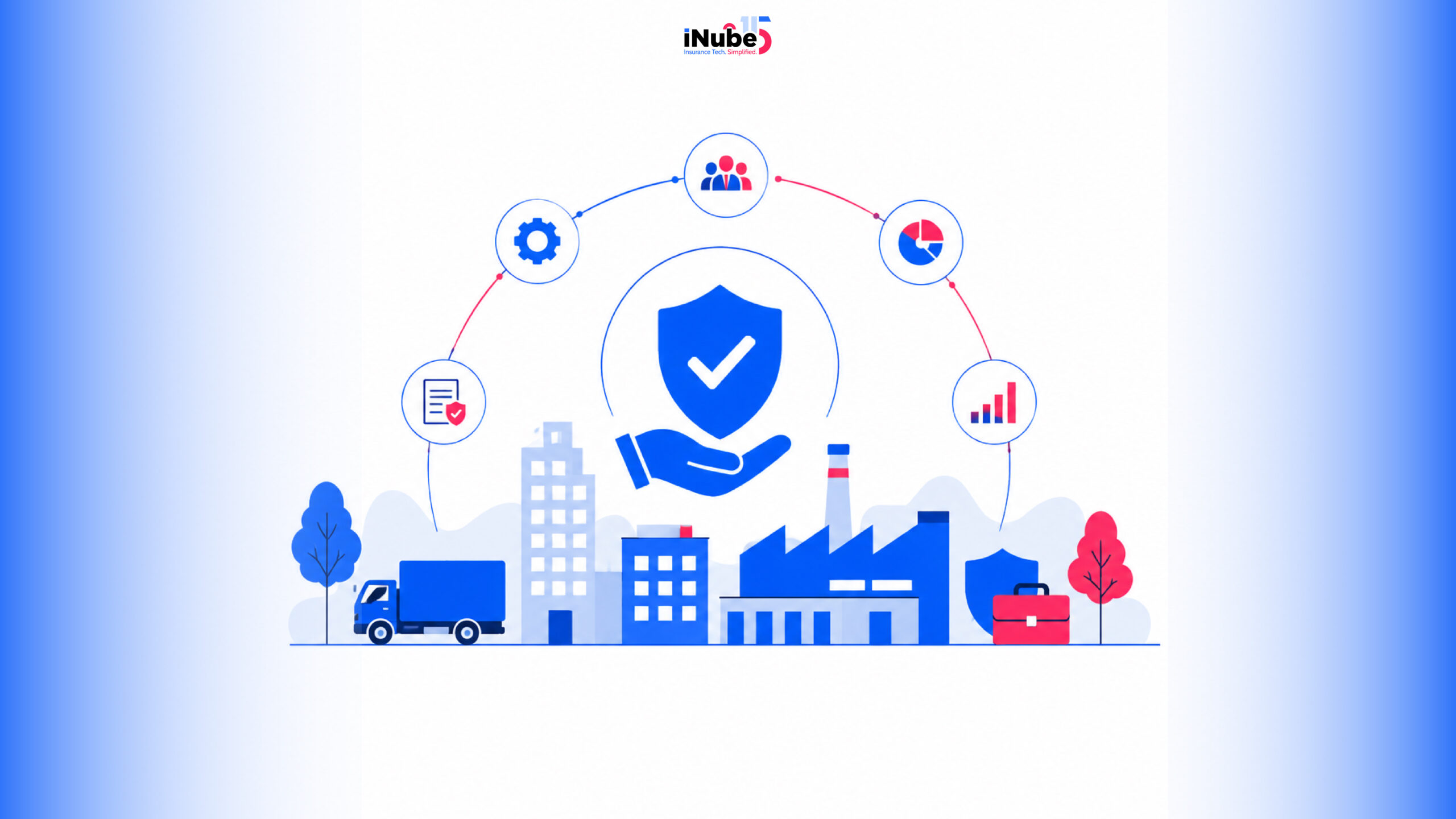
The commercial insurance landscape is experiencing a major turn in the market where traditional underwriting and the legacy workflows are not the only growth levers that the insurers can rely upon. Today, businesses need much faster policy issuance, real-time visibility, personalized coverage, and seamless claims experience. At the same time, the insurers need to deal with the rising fraud risks and evolving regulations, followed by the climate-related exposures and increasing operational complexity.
The focus is shifting from only prioritizing the digitization aspect to building agile commercial insurance operations at scale, adapting and delivering profitable growth.
Why is technology investment becoming a crucial component in Commercial Insurance?
The commercial insurance space essentially operates in a much more highly complex environment, as compared to the personal insurance lines. Each and every policy typically involves multiple variables. These include business size, industry exposure, asset valuation, liability risks, and compliance mandates followed by the claims history.
The traditional systems often struggle to handle this complexity in a much more efficient manner.
Most of the insurers today face many challenges such as manual underwriting processes, fragmented policy administration systems, delayed claims settlements, limited visibility into risk data, high operational costs, and slow product launches followed by inconsistent customer experiences.
These are a few of the operational bottlenecks that directly impact profitability and retention. This can be a deterrent to the insurer as the customer expectations drastically continue to evolve.
Where is the shift happening?
The Commercial Insurance industry is truly witnessing a major transformation that’s essentially driven by the digital-first infrastructure.
The modern insurers are rapidly expanding their technology investment horizon. From AI to API-led ecosystems, these technologies are empowering the insurers to redesign the core operational processes while improving speed, accuracy, and customer engagement.
Where is AI-powered underwriting transforming risk assessment?
Underwriting has traditionally been one of the most time-sensitive functions in Commercial Insurance. The insurers will now be able to analyze historical claims data and industry-specific risk patterns; IoT and telematics data, followed by financial behavior indicators; external market intelligence; and real-time operational risk signals.
However, with AI in the ecosystem, this underwriting landscape is changing and is enabling the insurers to reduce manual intervention, improve pricing precision, detect anomalies early, and accelerate quote-to-bind cycles, followed by a significant improvement in the underwriting accuracy.
Automation is redefining the traditional commercial claims management landscape.
The claims experience essentially remains one of the most critical moments in the entire insurance journey.
The customers today expect much faster settlements and transparent communication followed by minimal operational disruption during claims operations.
Technology investments are truly helping the insurers to automate several aspects of commercial claims management, which include FNOL, or the First Notice of Loss processing; document verification; fraud detection; claims triaging; workflow orchestration; followed by survey and inspection management.
The insurers using AI-driven fraud detection systems are better equipped to seamlessly identify any suspicious claim patterns before any significant amount of financial losses occur.
How are low-code platforms accelerating insurance innovation?
One of the biggest challenges that the Commercial insurers essentially face is the inability to rapidly adapt to the changing market demands. These legacy systems would often require an extensive development cycle even for the minor products or the workflow changes.
This is exactly where the low-code and no-code insurance platforms will become the ultimate game changers. These platforms would empower the insurers to launch the products faster, configure the workflows much quicker, and accelerate the digital transformation initiatives.
These low-code platforms will be significantly helping in becoming the ultimate game changers.
How are data and analytics driving smarter decision-making?
Data now crucially stands at the center of modern commercial insurance operations.
The insurers are investing heavily in the advanced analytics platforms, which can essentially be helpful in processing large volumes of structured data and unstructured data.
The predictive insight is also helping the insurers to proactively manage the risks instead of just reacting to the losses. In addition to this, this shift from reactive insurance to proactive management is truly redefining the role of commercial insurers.