

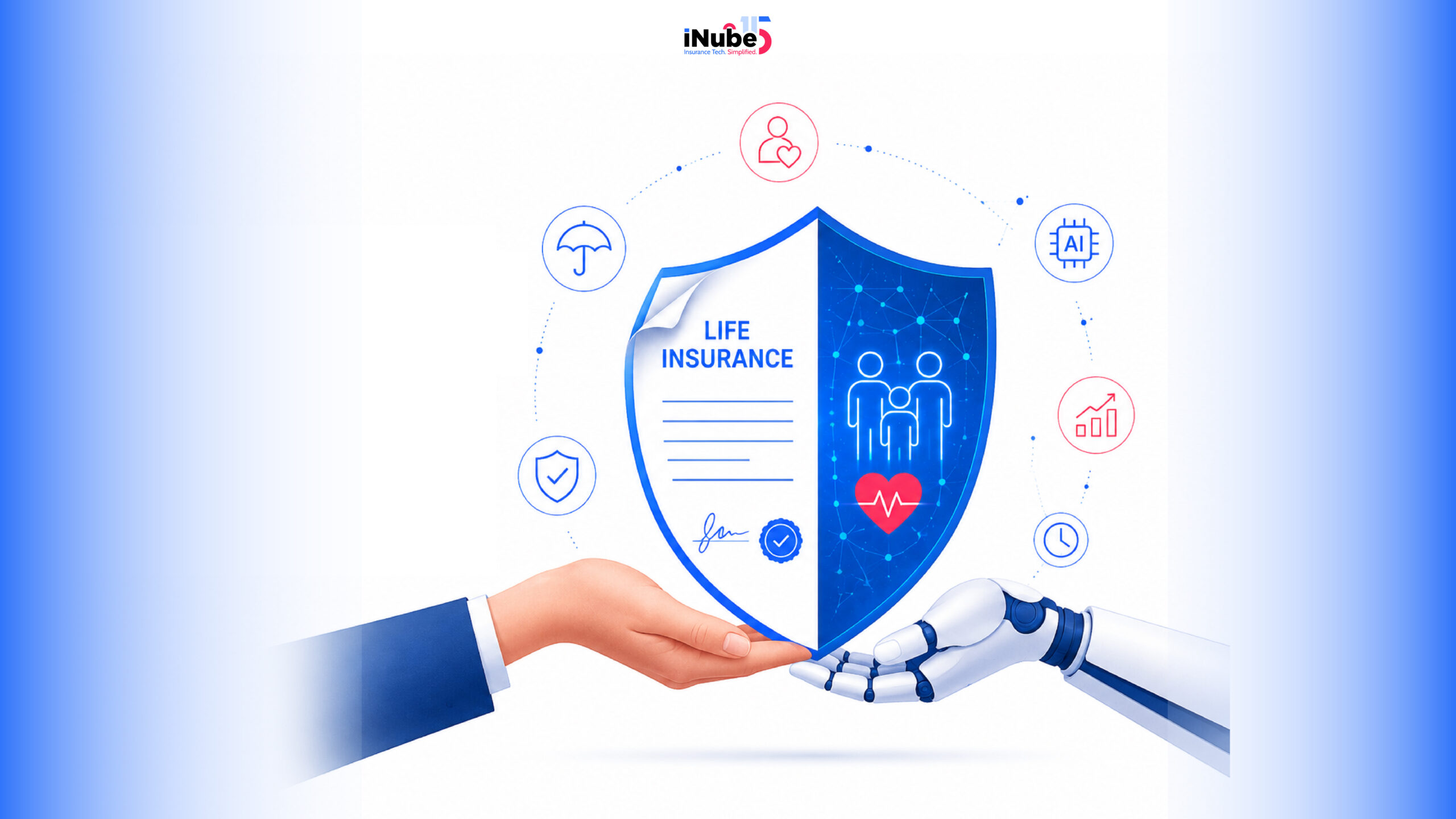
The Life insurance and Annuities industry has essentially spent the past several years only accelerating digital transformation. But 2026 isn’t just limited to experimentation; today it’s all about execution. The core technologies are driving modernization, and this includes Artificial Intelligence, advanced data infrastructure, and digital distribution platforms, which will no longer be optional capabilities. Today, they are essentially becoming the foundation of how insurers design products, engage customers, and truly support the advisors.
This is also simultaneously leading to deeper economic forces that are reshaping the industry’s mission. This is enabling AI to integrate deeper into the insurance processes and enhance the way life insurance operations are conducted.
Today, AI is moving from experimentation to embedded capability
AI has been one of the most dominant topics across financial services for several years. In the insurance sector, however, real transformation is only just the beginning.
The early AI deployments are essentially focused upon narrow applications, and that includes fraud detection, chatbots, and basic automation. Those are the ones which, essentially, delivered incremental efficiencies but have left much of the broader value untapped. However, in 2026, the industry is essentially moving beyond those isolated pilots as AI becomes increasingly integrated through the insurance lifecycle, right from application intake and underwriting triage to product design, distribution insights, and servicing.
The practical impact here is speed.
Where’s the change?
The processes that historically relied upon multiple handoffs, manual reviews, or weeks of back-and-forth can now be dramatically shortened. The advisors will be able to evaluate the product captions and compare them much more quickly. The applications can be pre-populated using verified data sources, and the underwriting decisions can be generated much faster through advanced data analysis.
However, AI’s greatest potential lies in enabling intelligent decision-making across the entire insurance system.
The integration across ecosystems to understand who will lead
Despite the prolonged excitement around AI, only one thing remains clear—technology is only as effective as the broader ecosystem it essentially operates within.
Most of the insurers still work across multiple fragmented systems that were built over the decades. Customer information, underwriting data, product illustrations, servicing workflows, and distribution tools will often exist in separate systems that would not connect as seamlessly as they should.
This lack of integration will create friction across the insurance lifecycle. Even the most promising technologies can only deliver limited value if the systems, partners, and the processes around them remain disconnected.
Priorities in insurance are shifting
In 2026, most of the competitive insurers will be prioritizing and creating more connected ecosystems that will be bringing together internal operations, external partners, and also the advisor workflows in a more coordinated way. This essentially means enabling much smoother handoffs across the journey, thus improving visibility across multiple stakeholders. Additionally, also ensuring that the flow of information will be much more consistent—right from application through underwriting, issuance, and service. When this kind of integration is in place, innovation becomes much more realistic and also scalable.
Personalization is the new way to redefine customer experiences
Personalization is everywhere today, right from the e-commerce stores to purchasing a policy. With the advances in machine learning and analytics, the insurers are getting empowered to seamlessly evaluate demographic, behavioral, and geographic signals when designing the products or recommending the coverage levels.
Instead of essentially presenting the customers with a much broader menu of generic options, the insurers will be able to guide the individuals towards solutions that essentially align with their financial goals, risk tolerance, and life stage.
In the near term, personalization will also focus primarily on improving product fit and simplifying decision-making. The customers will also encounter clearer choices and better explanations of the tradeoffs, followed by more relevant options while also evaluating coverage.
Data-driven distribution is truly transforming the advisor engagement
The distribution landscape has always been one of the most complex elements of life and the annuities market. The advisors need to navigate through the product comparisons, regulatory requirements, sustainability documentation, and the application processes, which come across multiple insurers and systems.
With data taking a center stage, the digital journeys too need to be at par.
Digital journeys must match the modern customer expectations
One of the most important shifts that is underway in insurance is the rising influence of digital commerce standards.
The customers today are increasingly evaluating their financial experiences through the same lens as they continue to apply to online banking or investment platform apps. They also continue to expect simple navigation, clear information, and immediate feedback.
For the insurers, this would essentially mean that the digital experience cannot essentially stop at the first interaction.
What’s ahead?
The forces in the life and annuity sector have been getting reimagined and are telling a different story. AI is truly accelerating decision-making, followed by more connected ecosystems that are enabling the newer levels of personalization. Distribution networks are also becoming much more precise and efficient. This is exactly where trust and integrity backed by advanced technology will play a vital role.