

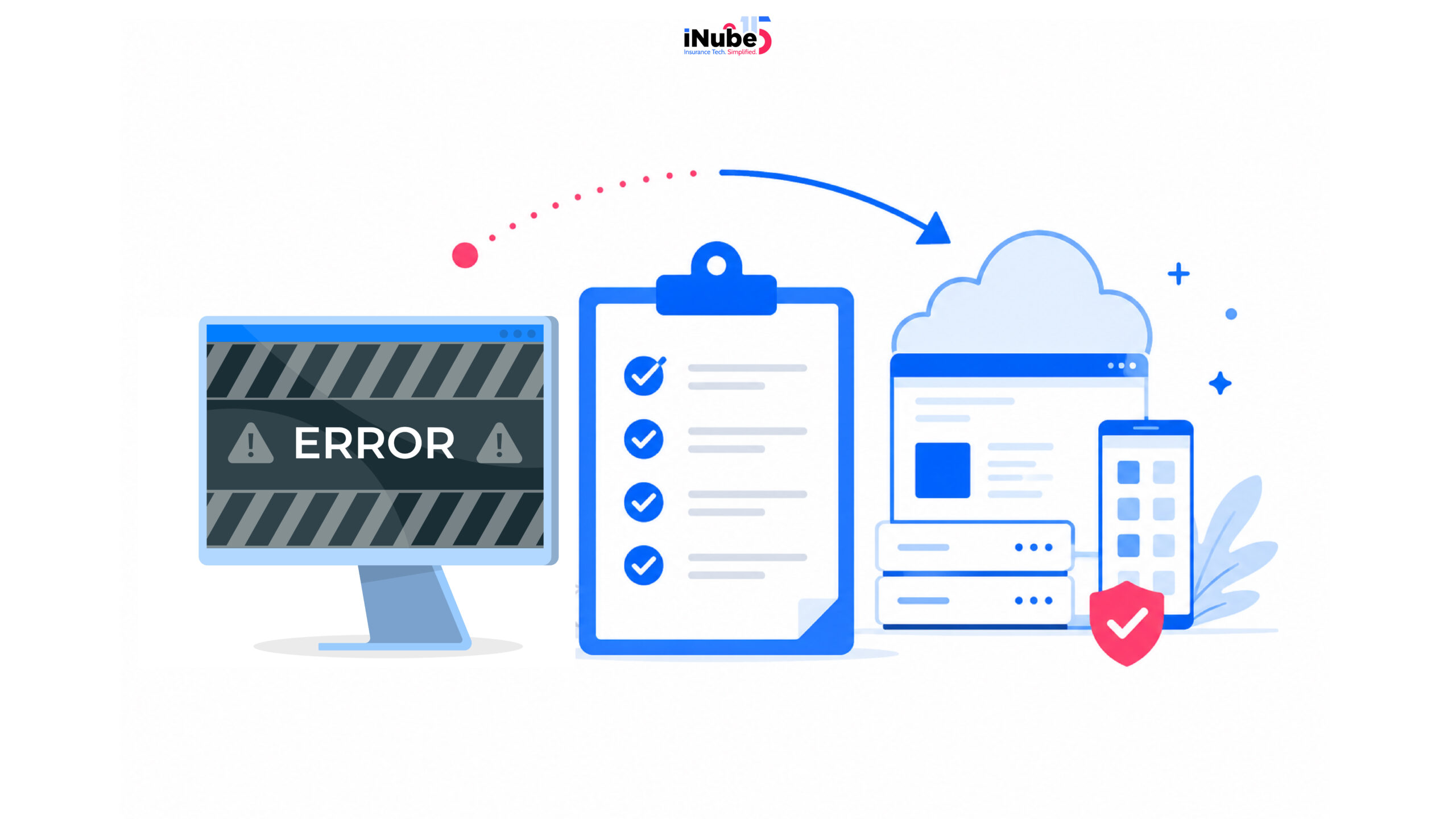
When was the last time you had an unpleasant customer experience from any of the food delivery apps? Chances are you had it a long time back or not in the near future. Now flip the situation to purchasing a policy and recall one such experience when you had an unpleasant experience; it can be slower processing or fragmented processes. This is exactly where the insurers lose the edge of staying ahead of the competition, while they deal with legacy systems or outdated technology in the back end to enable the processes.
A recent study from Accenture has highlighted that, 61% of insurance execs say shifting consumer preferences have accelerated their reinvention strategy. This is where the need for platform modernization will be playing a pivotal role in not just enhancing customer experience but also simplifying operations.
The inflection point in the industry is here.
For years, the insurers have essentially approached modernization from a more critical lens. The large-scale transformation programs were often delayed because of the cost concerns, operational risk, and much heavier dependency on the legacy core systems.
However, the market has changed much more dramatically.
Today, the insurers are facing some of the critical pressure from multiple touchpoints that essentially include digital-first customer expectations, AI-driven operational disruption, embedded insurance ecosystems, omnichannel distribution demands, increasing cybersecurity concerns, rising operational expenses, and faster product innovation cycles.
What platform modernization actually mean?
Most insurers still associate modernization with just replacing the core systems. In reality, platform modernization is much broader. This also essentially involves creating connected digital ecosystems, which will empower the insurers to launch products much faster, enable seamless distribution, improve operational efficiency, integrate the AI capabilities, support real-time decision-making, and deliver omnichannel experiences, followed by reducing the dependency upon manual workflows.
Legacy systems are expensive and a road blocker today
The conception around modernization has always surrounded expensive technology implementation. In reality, essentially maintaining fragmented legacy environments would often become much more expensive over time.
As per Deloitte, the organizations that are increasingly reengineering their digital core because the incremental transformation essentially will be approaching. This will be no longer sufficient to handle the rising business complexity and AI-driven operational demands.
With legacy systems, the insurers will be having to incur hidden operational costs through duplicate workflows, high maintenance overhead, slow product configuration cycles, limited integration flexibility, manual compliance processes, and poor data accessibility.
These are the inefficiencies that will be directly impacting the customer experience and also business responsiveness.
The challenge that comes here will be much larger when the insurers essentially attempt to introduce AI into the disconnected environments.
AI is not the only one that can deliver meaningful value even if operational data crucially remains fragmented across multiple systems.
The insurer cheat sheet- Where the insurers need to step up to modernize
Here’s a comprehensive cheat sheet that the insurers can refer to while taking up modernization decisions:
Product launches take up too much time
If launching a new product essentially requires months of IT dependency and also complex backend configuration, the legacy systems are truly slowing down growth.
Teams are operating across multiple platforms
When underwriting, claims, servicing, and distribution teams essentially work across disconnected systems, operational inefficiencies will be increasing significantly.
Customer journeys feel fragmented
If the customers essentially cannot seamlessly move between channels, agents, apps, and servicing teams. This is exactly why your ecosystem essentially lacks integration maturity.
AI initiatives deliver limited ROI
If the AI investments are not really generating measurable business outcomes, then poor infrastructure and fragmented data might be the underlying issue.
Customer expectations are shifting and so should the processes
Customers looking to purchase a policy today expect to compare experiences across multiple industries. They are not only looking to compare insurers with multiple insurers anymore. Instead, compare insurance experiences with e-commerce platforms, banking applications, streaming services, mobility apps, and digital healthcare ecosystems.
In one of the recent reports by SwissRe, it was observed that digitalization is truly reshaping insurance into a far more connected and predictive industry. This is fundamentally changing the way customers expect the insurers to engage with them.
This is the shift that is especially important in the emergent digital markets where customers are increasingly mobile-first. For instance, as per a SwissRe report, it was reported that 66% of the surveyed customers in India preferred purchasing insurance online while following accelerated digital adoption trends.
This is exactly where the insurers who fail to modernize will be losing long-term customer relevance.
What’s ahead?
The industry is essentially entering a period where operational agility will define market leadership. Platform modernization is no longer just about upgrading the technology infrastructure; instead, it’s about enabling the insurers to operate at the speed customers, partners, and the markets can now expect.