

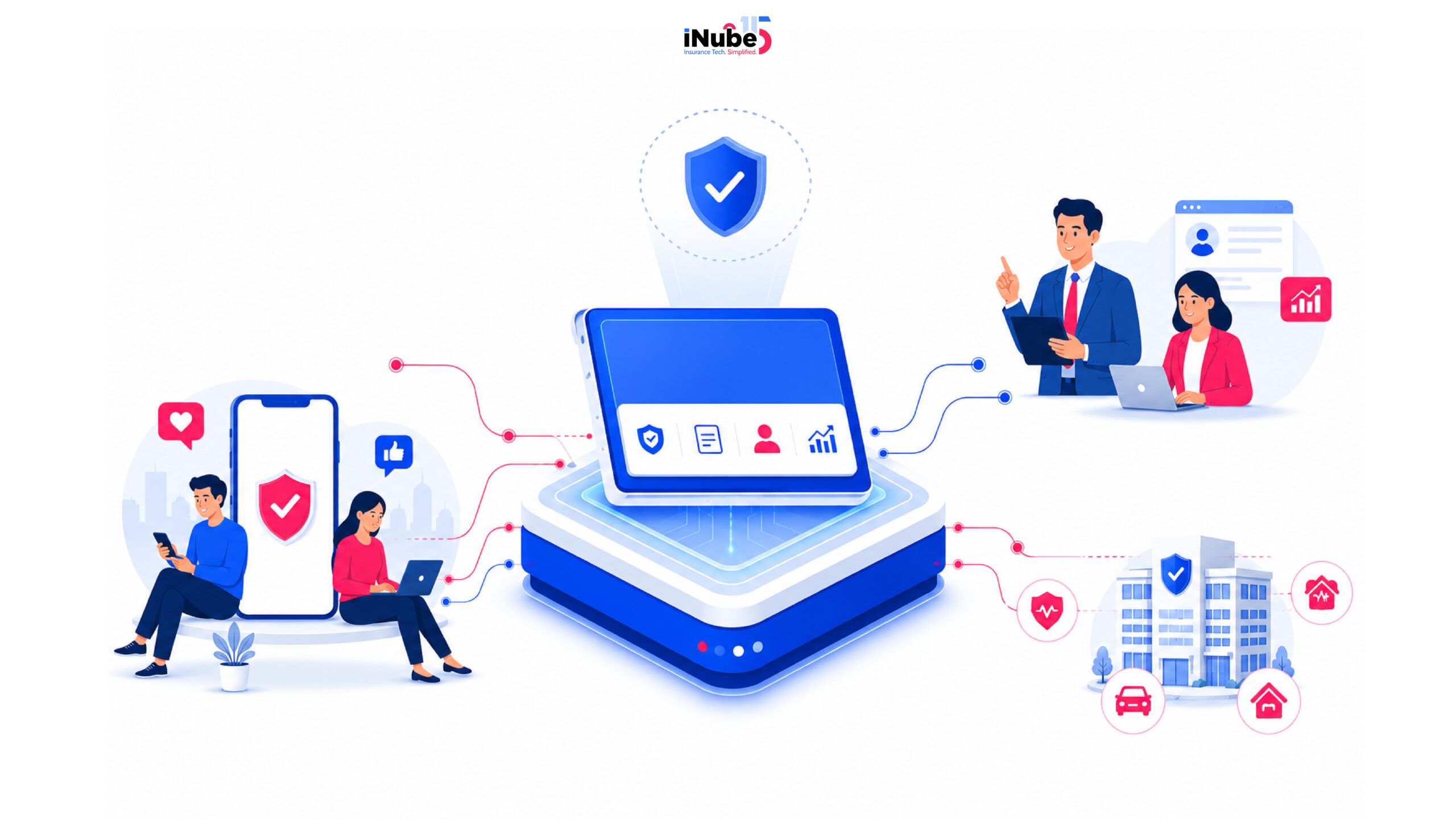
Digitization is essentially forcing the insurance companies to rethink how they price risk, process the claims, and also generate revenue. It essentially began as incremental technology upgrades but has become a structural shift across the insurance value chain. In 2026, the numbers are climbing up the charts, as 89% of Chief Intelligence Officers in the Annuity and Life insurance industries plan to rely on insurance technology. This is exactly the reliance that is pushing insurance distribution.
Top 3 reasons why digital transformation is a necessity
Here are the top 3 reasons to understand why digital transformation will continue to push insurers to adapt agile ways of insurance distribution
Customer expectations have significantly changed
Today, the policyholders essentially expect real-time quotes, instant policy updates, digital claims filing, and visibility into their coverage area at all times. Those capabilities are just the bare minimum, and the insurers who are unable to offer this are losing the battle in the longer run.
Efficiency can longer be compromised
Tight combined ratios that measure underwriting profitability often leave little room for operational inefficiency. The automation in general has got immense potential to reduce operational costs. A McKinsey study highlights this shift and pinpoints AI’s ability to reduce operational costs by up to 30% within the next five years.
Consider the automation activities such as claims and underwriting that can significantly lower the handling costs while also improving accuracy and the turnaround times.
Data is the ultimate silver spoon
Most insurers are equipped with decades of risk and claims data, but they only gain value from it when they are actively using it. The advanced analytics and AI will enable more precision. The analytics and AI will be enabling seamless and also more precise pricing, stronger fraud detection, and also much better risk segmentation. This will be helpful in supporting more consistent underwriting performance followed by sustainable growth.
Digital-native competitors are moving much faster
The new entrants are essentially built upon the cloud-based architectures that support rapid product improvement and also much easier integration with the partners. The incumbents that are essentially constrained by the legacy systems essentially face structural limitations unless they get modernized foundations.
Where digitization is pulling the lever for insurance distribution
With digitization taking the center stage, here’s how digitization is actually pulling the lever for simplifying and expanding the insurance distribution capabilities:
Unified distribution ecosystems
One of the keyways by which digitization is truly helping is unifying the end distribution process. The modern platforms are bringing multiple stakeholders into a connected environment where agents, partners, underwriters, customer service teams, and the administrators will be operating through integrated workflows.
Faster product distribution
The low-code and the configurable platforms will allow the insurers to launch multiple new products much faster and also without the need for extensive redevelopment efforts. This will be significantly improving the responsiveness to market opportunities.
While the distribution landscape is simplified, challenges still lurk in the background.
Challenges that still lurk in the background
Here are the top challenges that still continue to lurk in the background:
Legacy system dependencies
There are many insurers who still continue to rely upon the outdated core systems that heavily limit flexibility and scalability.
Change management resistance
Most of the technology adoption essentially fails when the core organizational teams are not really aligned around the new operation models.
Integration complexity
The distribution ecosystem encompasses multiple third-party systems, partners, and regulatory frameworks. These are the ones which essentially build connected ecosystems and also require careful integration strategies.
Data silos
This is another one of the key challenges that the insurers need to deal with. Disconnected data environments essentially continue to slow down decision-making and reduce visibility. Solving these challenges essentially requires both technological and operational transformation.
What’s ahead?
The digital insurance platforms are rapidly becoming the core backbone of modern insurance distribution. They are seamlessly helping the insurers to enable and improve agility and strengthen the partner ecosystems followed by the way to enhance customer experience and accelerate the growth curve.