

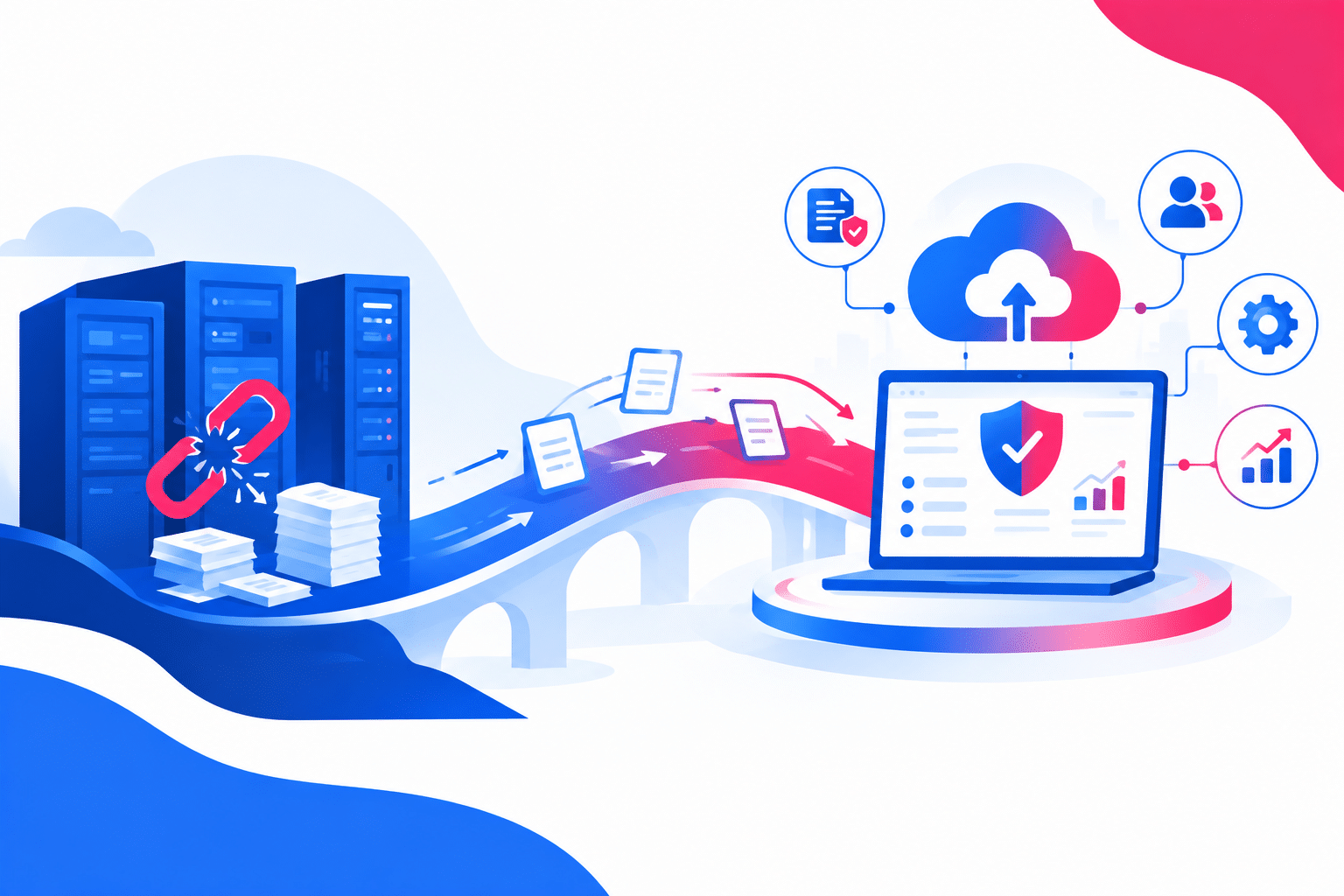
Every insurer who is looking at a modern policy administration system will eventually run into the same paradox. The legacy system that everyone wants to replace is also the one who is holding decades of business logic that nobody wrote down. However, before insurers can build the future of the policy administration system. They will be the first to reckon with their legacy systems, and that is the reckoning which will be becoming an important part of technology itself.
Legacy systems are not just obstacles but are the institutional memory
It’s quite easier to frame legacy systems purely as a liability, and in more than that. However, dismissing them entirely misses something deep that is quite important, and this includes that these systems, however outdated their architecture, will still have encoding of the years of underwriting decisions. However, the overall exception lies in handling business rules, which were never really formally documented anywhere else. For instance, a policy administration built that was built decades ago was not just about processing transactions; instead, it was quietly accumulating the institutional knowledge every time an exception was coded in or a rule was adjusted to handle a real-world edge case.
This is exactly why the insurers who treat the legacy treatment as a pure demolition project will often run into trouble. However, the rules that are governing a long-standing book will of business will be frequently living in the system’s code itself, or worse, only in the memory of a small handful of senior staff who have specifically built and maintained it. The first step to this is to recognize the approach here.
Extracting the logic before replacing the system
Given how much the undocumented knowledge sits inside the legacy platforms, one of the most important and also often one of the most skipped ones is stepping into modernization and extracting that logic before truly trying to replace it. This essentially means treating the legacy insurance policy admin system as a source of requirements, not just a system. Instead, it’s a system to decommit.
The insurers are increasingly using the AI tools to help with this extraction and also having the models read through the old, undocumented code and also translate it into clear, human-readable business rules. This not just protects the institutional knowledge from disappearing but also when the key staff retire or they truly move on.
This dramatically shortens the requirements gathering phase of a new implementation, and also since much of that documentation work used to happen through the lengthy interviews and the manual code review can now happen. This will be far faster than the right tooling in place.
Why a full replacement rarely works
The instinct is to modernize everything at once, which is understandable, but a full, all-at-once replacement of a policy administration system insurance teams must have relied on for years. This is one of the riskiest paths that is available. However, mitigating hundreds of thousands of active policies in a single cutover will be concentrating enormous operational risk into one event. This will come with very little room to course-correct if something goes wrong.
A more resilient path will be to treat the legacy system as a foundation to build alongside and not just tear it down immediately. Launching a new single product line, something like having a narrow and well-defined system, such as that on a modern, cloud-native platform, which lets the insurers prove the way a new system works and under real conditions before committing their entire book to it. The legacy platform will be able to continue serving the existing policies, either running off naturally through the renewal cycle or mitigating it in structured phases, instead of shifting everything at once.
Data is the real differentiator in a modern PAS
The legacy policy administration systems were specifically built for a world of static data. The information that is captured once during the time of application is rarely refreshed until renewal. This is the model that does not hold up against what is technically possible today. One key thing that a modern policy administration system needs to keep in mind is to be data-dominant, that is continuously pulling in the relevant information from the external sources throughout the policy lifecycle instead of relying solely upon what was captured at the start.
This specifically shows concretely at the point of quote and bind, where the systems are capable of pulling in the property, location, or usage-based data through open APIs. That can price the risk far more precisely than one working from a static snapshot. The insurers who are still running on the legacy platforms cannot support this kind of real-time data integration. This is not just about working with outdated technology; instead, it’s about leaving the pricing accuracy and also competitive advantage on the table with every policy that they write.
The human side of legacy platforms often gets wrong
The legacy systems are not just built with outdated technology; instead, they were often built with little regard for how the people are using them daily and would actually experience the workflow. However, the agents who are working within the decades-old policy admin interfaces often describe the experience the same way. This specifically involves too many screens, too many clicks, and the workarounds that are built around necessity instead of good design. Additionally, a genuinely modern system will be correcting this by designing the way different users actually work. This requires surfacing only in the fields and the functions that are relevant to a given task instead of forcing everyone through the same interface. When this is done well, it essentially eliminates the shadow spreadsheets and the manual trackers, which inevitably spring up whenever a core system does not give the teams what they want. This translates to a strong, if unofficial, signal that a Policy Administration System has fallen short of what has been required by the users.
What’s ahead?
The legacy systems may be holding the systems back, but, technically, they are also holding the institutional knowledge that makes a thoughtful transition possible. The insurers who extract that knowledge, modernize incrementally, and build governance in front of the start will not be replacing their old Policy Administration System, and they’ll build one genuinely ready for what insurance technology demands next.