

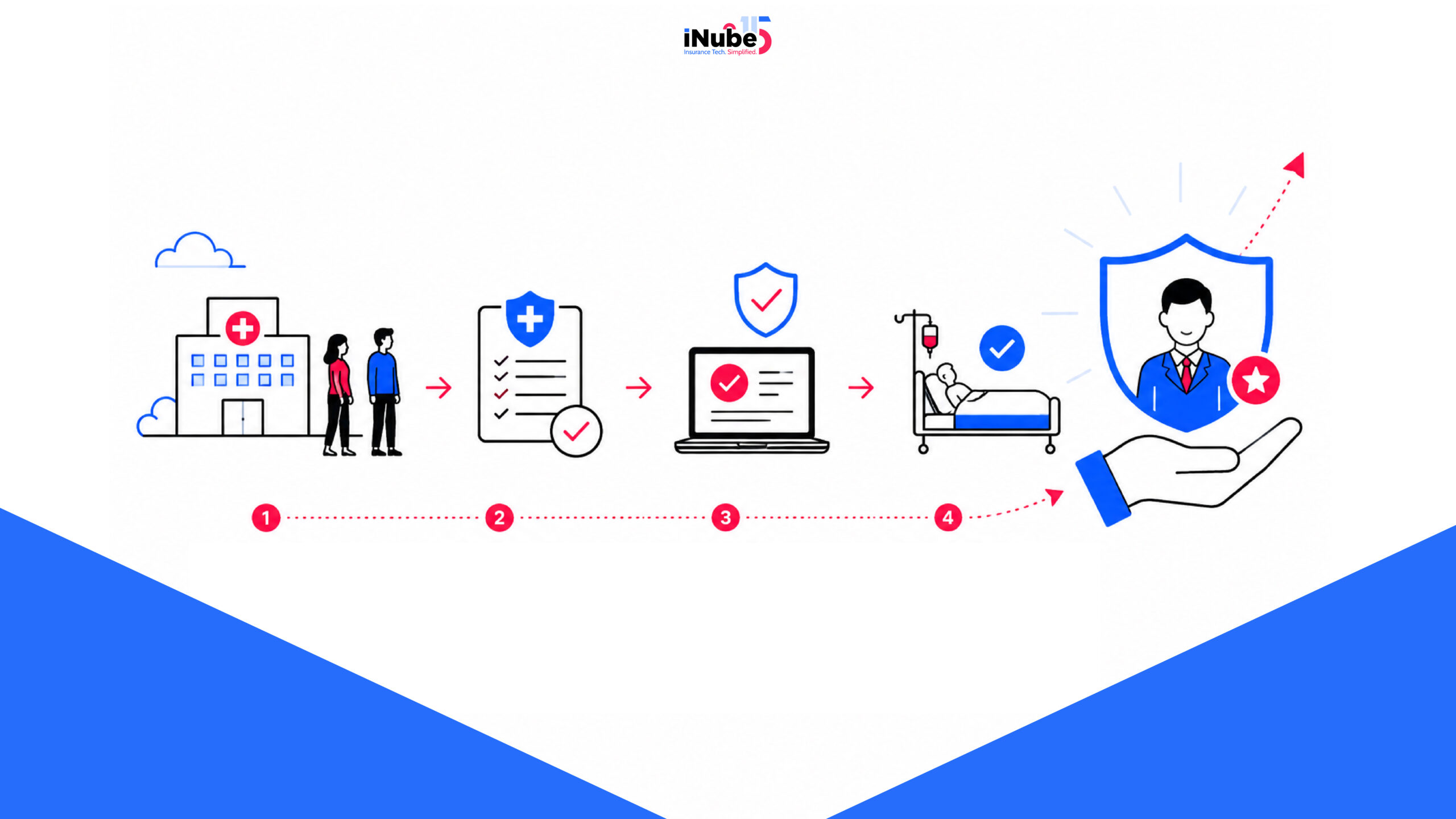
Nobody really wants to think about the endless hospital bills while they are actually in the midst of a medical emergency. That is exactly what cashless health insurance is appealing to all the health insurance policyholders. In one of the recent studies, it was found that around 7 out of 10 respondents opted for cashless treatments, and these claims recorded a Health claims experience index score of 86.7, which was a significantly higher score, and this is not a small gap. This number tells the insurers exactly where the policyholders want the industry to head.
Let’s dive in further.
Why is cashless claims gaining popularity?
The logic is quite simple. The method of ttransaction,in both reimbursement and cashlessness, plays a pivotal role. With reimbursement, you will be paying first and then hope to get a reimbursement later. However, with cashless, the hospital and the insurers will be sorting out the bill amongst themselves. Additionally, the customers who used cashless facilities highlighted easier documentation and quicker approvals, as well as access related to insurer-linked network hospitals, as a major reason for higher satisfaction. This is also where a real financial angle comes in—the cashless claims will let the hospitals coordinate directly with the insurers, reducing the immediate financial burden on families during emergencies.
The health insurance claims process has got some rough edges
Customer satisfaction isn’t a solved problem just because the cashless preference ratio is quite high. In a recent study by Deloitte, it was found that India’s Health insurance claims experience scored 82.8 out of 100, placing it under the moderate category.
So, what exactly is bothering the policyholders even when they pick up the smoother route? Today, the customers expect much clearer communication on claims decisions, detailed explanations for rejections, real-time claims tracking, and much fewer documentation requirements. Today, the demand is not just for cashless claims; instead, transparent processes are also becoming a crucial necessity.
Where can insurers step up to bring value?
Since cashless claims are becoming the top preference for the policyholders, the real opportunity for the insurers lies in making the entire claims process smooth and transparent. Here are a few areas where the insurers can prioritize:
Real-time visibility
The policyholders need not have to call a helpline in order to know where their claims actually stand. A live tracker can significantly cut down on anxiety and also repeat the queries dramatically.
Plain language rejection reasons
When a claim gets denied, it’s not just an unpleasant feeling. Instead, it slowly erodes the customer’s trust in the insurer. The insurers who clearly communicate easily foster greater trust.
Wider, better integrated hospital networks
A recent report by The Hindu highlighted a much stronger verification recommendation at the time of policy purchase, better integration with the hospital networks and also much more reduced paperwork to make claims processing much faster and more predictable.
The AI angle- where technology helps in moving the needle
There are a lot of customer friction points, such as slow communication, unclear rejections, paperwork overload, and many hidden blockers, which are not just problems related to claims problems but instead are claims management problems.
Faster pre-authorization
As the cashless claims specifically hinge upon the way pre-authorization comes through, an AI system that cross-checks the policy terms, hospital bills, and the treatment codes in just seconds is crucial. Saving a huge amount of time that would have otherwise been wasted on manual review, which directly shortens the wait before the treatment actually begins.
Lesser wrongful rejections
Most of the claim rejections have come down to human error or inconsistent interpretation of the policy clauses. The models that are trained on the historical claims data can easily flag any genuine exclusions versus the edge of
Real-time status updates
The AI-driven platforms will be able to auto-generate plain language updates at each and every step. This includes submitted, under review, approved, and settled. Additionally, helping the policyholders to not be stuck in calling a helpline for the basic status checks.
Smarter fraud detection
The AI will be able to spot the patterns across thousands of claims that the manual reviews would miss. This additionally involves duplicating billing, inflated costs, and mismatched diagnosis codes. This helps in protecting the insurers without really slowing them down on their genuine claims.
Understanding the bigger picture
For years, the claims settlement ratios have been one of the most tracked indicators when choosing the Health insurance policies. However, that number alone isn’t enough. The metrics such as the HCX index essentially signal a massive shift. Here, the insurers are increasingly being judged on the experience and not just the outcome.
What’s ahead?
With the cashless health insurance claims in the picture, removing customer friction during the claims process has become much easier. However, a smooth claims experience isn’t just about offering cashless claims as an option, instead, it’s about backing it with transparent communication, tighter hospital integration and a claims management process which is built around the policyholder and not just the paperwork.